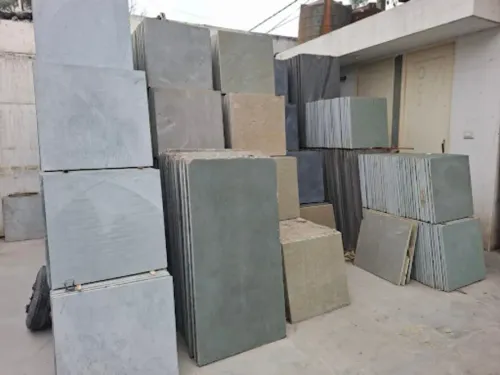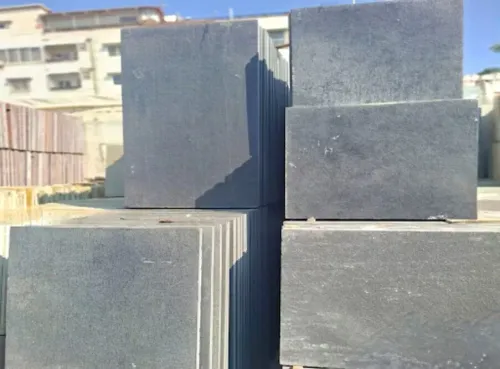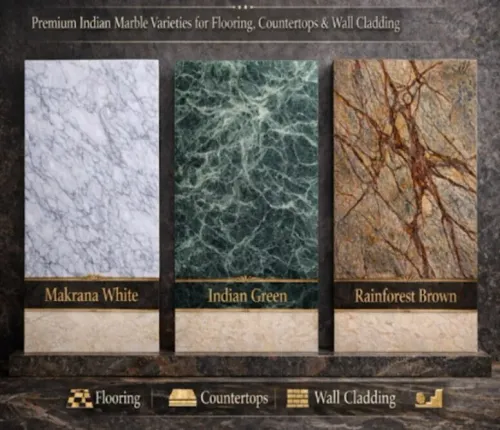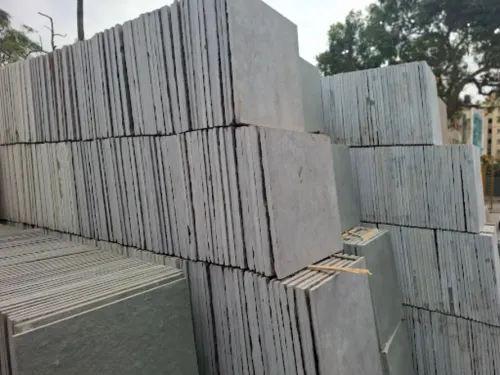

A small polished sample cannot reveal how a complete marble lot will vary, how much usable stone will remain after cutting, or whether the delivered slabs match what you approved. By the end, you will have a practical store-visit checklist, a method for checking quantity and yield, and a written purchase record that protects the project before fabrication begins.
Key takeaways
- Inspect full slabs under bright, angled light before approving marble.
- Confirm lot number, shade range, vein direction, and filled areas before payment.
- Calculate usable yield after cutting, defects, and matching requirements.
- Get fabrication, delivery, damage reporting, and replacement terms in writing.
Inspect the Actual Slabs, Not Just the Display Sample
Inspect full slabs under bright, oblique light before approving the stone; a small showroom sample cannot reveal the colour movement, veining, fossil content or filled areas across a large installation. Use this marble store inspection checklist:
- Record each slab number, dimensions, nominal slab thickness, finish and quarry or lot information.
- Measure slab thickness at several points, including edges and corners. Uneven thickness can create height differences at floor joints, skirting, counters and door thresholds.
- Examine both faces and all edges for cracks and fissuresை?, open veins, resin-filled areas, chipped corners, scratches, stains, warping and uneven polishing.
- Photograph the slabs in sequence and mark accepted natural features on the layout before cutting.
- Ask for a small mock-up with the actual marble, grout colour, edge profile and proposed lighting. It can expose shade mismatch, lippage and cleaning problems before installation.
| Inspection condition | What it reveals | Action |
|---|---|---|
| Bright showroom spotlight | Overall colour and finish | Do not approve on this view alone |
| Oblique or raking light | Hairline cracks, pits, repairs and waviness | Photograph and record every defect |
| Full slabs arranged together | Shade range, vein direction and adjoining movement | Approve the complete layout, not one sample |
| Slab edges and corners | Transit damage and thickness variation | Reject, reserve or document before cutting |
Check the delivered slabs against these photographs before accepting them. Once cutting begins, proving that a fissure, shade difference or filled patch existed beforehand becomes much harder.
Confirm the Lot, Shade Range and Vein Direction Before Payment
A showroom sample cannot identify the stone that will reach your site. Before paying, approve the actual slabs allocated to your project and get written confirmation that those slabs, not a similar display piece, will be delivered.
1. Record each slab number, batch or lot, quarry origin, thickness, finish, dimensions and visible defects on the quotation or selection sheet. Photograph the full face of every slab in sequence, including its number, and keep the original files.
2. Record the expected shade variation: marble sample versus slab. If the project needs a continuous floor or wall, approve the complete lot together; do not accept a promise to “match” slabs later. Mark accepted natural fissures, resin-filled areas and colour movement on the photographs or slab layout.
3. Request a dry layout or slab-by-slab cutting plan before fabrication. This fixes vein direction, bookmatching and the order of adjoining pieces, preventing strong veins from turning unexpectedly across a counter or the best sections being wasted in small cuts.
4. At delivery, compare every slab with the approved photographs and selection sheet before cutting. Inspect under bright, oblique light for transit cracks, corner damage, scratches, open fissures, stains, polishing defects and warping. Write defects on the delivery receipt and photograph them immediately.
Do not allow cutting until discrepancies are resolved in writing. After fabrication, it becomes difficult to prove whether a crack, shade difference or filled area existed before the slab was cut. A small mock-up using the actual stone and proposed lighting can expose a mismatch before installation spreads the problem.
Compare Marble by Usable Yield and Project Quantity
A quoted 100 square feet is sufficient only when it covers your net installed area plus a layout-based wastage allowance. Calculate the total surface area, then add pieces lost to cut-outs, broken corners, unusable fissures and trimming; a rectangular floor needs less allowance than a counter with several openings.
Ask for a slab-by-slab cutting plan showing:
- Gross slab area and calculated usable yield
- Sink, hob and other cut-outs
- Wastage allowance and the pieces assigned to each location
- Extra stone required for breakage or future replacement
- Cutting, edge profiles, polishing, transport and installation charges
Request a dry layout before fabrication if the stone has bookmatching or directional veining. Without it, the fabricator can cut away the strongest visual section, reverse the vein direction or leave adjacent counter pieces from different tones.
Compare competing slabs on the amount of finished work they produce, not only their size or price per square foot.
| Option | What to compare | Better value when |
|---|---|---|
| Large slab with strong movement | Higher price, fewer joints, more layout restrictions | Its usable yield covers the project with little offcut |
| Several smaller slabs | Lower entry price, more joints and shade variation | The design uses short pieces and avoids directional matching |
| Slab with cut-outs and fissures | Gross area reduced by openings and unusable zones | The quoted quantity includes those losses and replacement allowance |
Your quotation should state slab dimensions, thickness, finish, quantity, cutting scope, wastage allowance, tax and breakage responsibility. A cheaper slab is not cheaper if its usable yield leaves you buying another slab.
Evaluate the Store’s Fabrication, Delivery and Replacement Support
A project-supporting store puts its fabrication, delivery and replacement obligations in writing; a display-only store stops at the slab price. Ask for a quotation that identifies the exact stone, finish, slab dimensions, nominal thickness and quantity, then separates material, marble fabrication, installation and tax.
| Check | Display-only store | Project-supporting store |
|---|---|---|
| Fabrication | “Cutting available” without detail | Cutting plan, sink or hob openings, dimensions, wastage allowance and edge profiling named |
| Delivery | Delivery mentioned verbally | Transport and unloading location, access limits, timing and charges stated |
| Damage | Responsibility unclear after dispatch | Breakage responsibility defined, with inspection, photographs and replacement procedure |
| Replacement | No deadline or remedy | Written replacement terms for cracked, wrong, mismatched or damaged pieces |
Before paying, require these details on the estimate or purchase order:
- Slab numbers, approved photographs, lot or block reference, thickness and finish
- Dry layout or slab-by-slab cutting plan for directional veins, bookmatching or strong movement
- Packing method, delivery date, unloading equipment and who checks damage on arrival
- Sealing scope, installation exclusions and the cleaning products the supplier prohibits
Nakoda Marble can be judged by whether its quotation records these project details, not by the range displayed in its yard. A small mock-up using the actual stone, joint colour and edge detail also exposes shade mismatch or poor fabrication before the full order is cut.
Get the replacement process signed before fabrication begins; a verbal promise after installation is difficult to enforce.
Related product
 | Marble Marble Nakoda Marble is a trusted supplier of high-quality natural marble in Bangalore, offering a wide range of premium marble stones for residential,... |
Match the Stone and Finish to the Installation Conditions
A polished marble floor can become hazardous when wet, so do not treat shine as proof of suitability. Ask which finish is proposed for the exact location and request a wet-slip assessment or tested flooring system where rain, wash water or pool water is expected.
ANSI A326.3 results apply only to the tested surface and condition.
Use this procedure before approving the stone:
1. Match the finish to the exposure. For bathrooms, entrances and exterior paving, compare honed, textured or other slip-conscious finishes with polished marble. Confirm how the finish affects cleaning, staining, lippage and replacement work.
2. Request application-specific test data, not a claim that the stone is “strong.” Ask for water absorption and bulk specific gravity measured under ASTM C97/C503, plus abrasion and flexural-strength data for exterior paving or heavy traffic. For a wall or overhead installation, have the installer assess thickness, anchors, supports, movement joints, wind loads and fissures.
3. Approve a mock-up made with the actual stone, grout colour, edge detail and proposed lighting. It exposes shade mismatch, lippage and cleaning problems that a small showroom sample hides.
4. Put maintenance limits in writing. Marble can suffer acid etching even after sealing; lemon juice, vinegar, acidic bathroom cleaners and descalers can leave dull marks. Confirm the sealer’s purpose, cleaning products, resealing schedule and spill-response method.
If the store offers Kota stone, confirm that it is quoted as limestone, with its bedding, clefts, colour variation and edge breakage recorded alongside the intended finish.
Frequently asked questions
Why should you inspect full marble slabs instead of a showroom sample?
Full slabs reveal colour movement, vein direction, fossil content, filled areas, cracks, and shade variation that small samples cannot show.
What should you confirm before paying for marble?
Confirm the lot or batch, available slab count, shade range, vein direction, surface finish, and which slabs are reserved for your project.
How do you compare marble by usable yield?
Estimate the area that remains after removing cracks, edge damage, awkward cuts, openings, and pieces rejected for colour or vein mismatch.
What support should a marble store provide after purchase?
Clarify fabrication measurements, packing, delivery access, unloading responsibility, inspection at arrival, damage reporting, and replacement terms.
How should you match marble to installation conditions?
Choose the stone and finish according to location, moisture exposure, foot traffic, staining risk, slip resistance, and the installation method.