A small sample and a low square-foot rate can hide differences in slab movement, thickness, fabrication, installation and warranty responsibility. By the end, you will be able to compare the actual stone, the complete delivered cost and the dealer’s written process before approving your order.
Key takeaways
- Inspect the actual slab under even light and record its identification.
- Match granite specifications to countertop or flooring use.
- Compare quotations by area, thickness, edge work, transport and installation.
- Put slab approval, fabrication, damage handling and warranty terms in writing.
How can you judge the actual slab rather than a showroom sample?
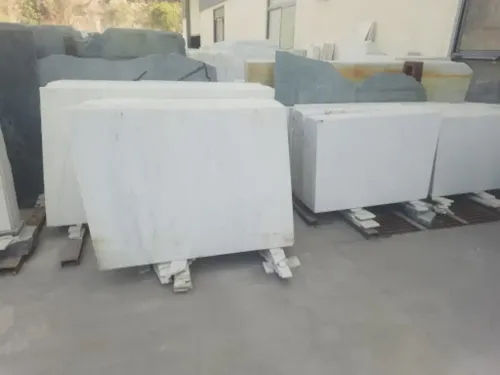
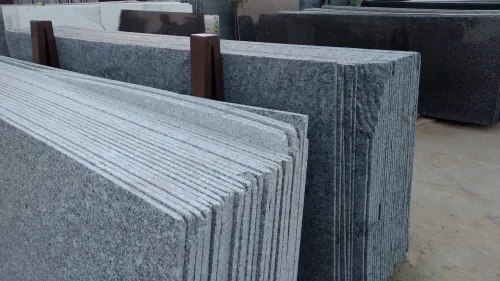
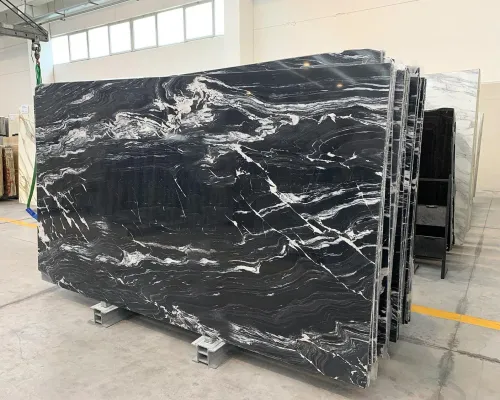
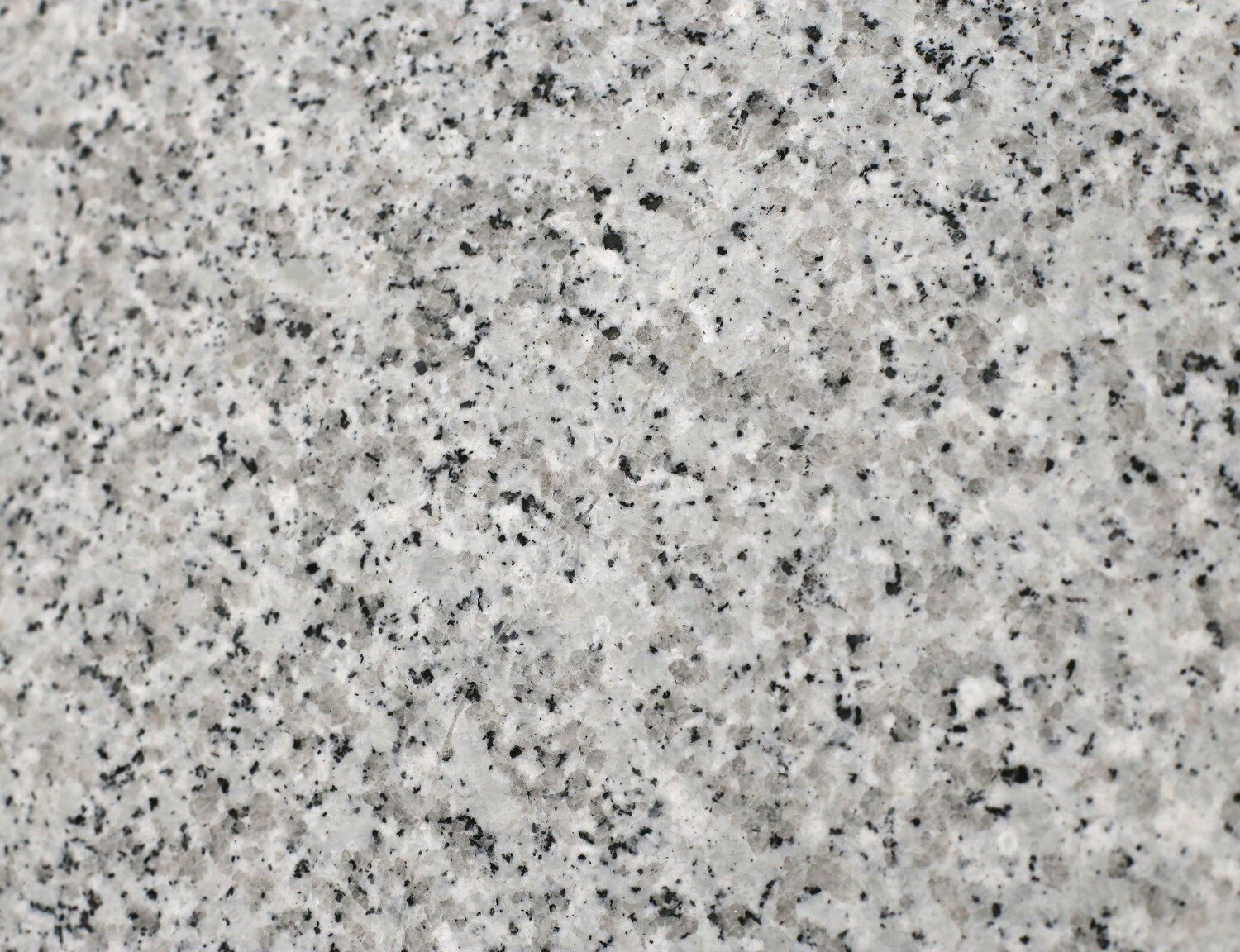
A 300 mm showroom sample cannot reveal how colour, crystal size, grain movement, veining and patches will develop across a full granite slab. Ask to inspect the actual slab under strong, even light, not only a photograph or sample, and record its identification before approving it.
1. Record the slab number, lot or quarry reference, dimensions, stated thickness, stone name, finish and colour. Check colour consistency from edge to edge, then view the slab from several angles to identify changing grain movement, veining and patches.
2. Mark visible pits, open fissures, filled fissures, resin-filled areas, repaired sections and colour-enhanced zones. These treatments are not automatically defects, but the dealer must state what each one is and whether the warranty covers separation, staining or breakage.
3. Place the proposed cutting layout on the actual slab. Record the positions of seams, sink and cooktop cut-outs, edge drops and narrow strips, and confirm that adjacent pieces come from the same slab. Approve any vein or pattern matching and its extra slab cost in writing.
4. Inspect the selected finish on a sample of the same stone. Polished, honed and leathered surfaces show marks and retain dirt differently; record the cleaning method and whether a penetrating sealer, curing period and sample-panel test are included.
Do not approve a slab with “subject to availability” written beside its photo. Keep dated photographs of the slab, markings and signed layout; that record prevents a different lot from quietly replacing the stone.
Which granite specification fits countertops, and which fits flooring?
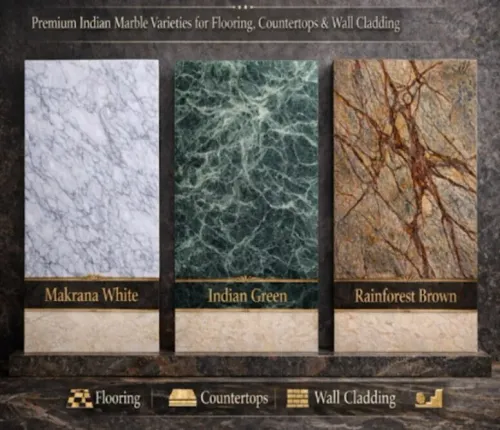
A countertop and a floor demand different evidence from the same slab. Confirm the stone’s trade name and geological classification first: “granite” is sometimes used loosely for other stones, while marble and Kota stone have different acid resistance, porosity and maintenance needs.
| Intended use | Stone type and granite grades | Finish | Thickness and performance check |
|---|---|---|---|
| Countertop | Choose a grade with consistent density, low visible absorption and no cracks around planned cut-outs. Ask what the dealer’s granite grades actually measure; colour or price alone is not a grade standard. | Polished gives strong colour but shows scratches, etching and water marks clearly. Honed or leathered finishes hide some marks but need a maintenance plan. | Compare 20 mm and 30 mm slabs, including cabinet support and edge build-up. Confirm sink, hob and drain-groove areas will not weaken the stone. |
| Flooring | Judge flooring suitability separately from countertop suitability. Ask for abrasion evidence, including ASTM C241/C241M results where available, and assess wet-foot traffic. | Polished can be more slippery when wet. Honed, flamed or textured finishes improve traction, but textured surfaces hold dirt and take more cleaning. | Match thickness to the substrate, tile size and traffic level. A thicker piece is not automatically stronger if the base is uneven or poorly bonded. |
Ask to see the proposed finish, not just a polished sample. Confirm the penetrating sealer, curing time and resealing interval; sealing reduces staining risk but does not make granite impermeable. For marble or Kota stone, compare expected acid etching from lemon, vinegar and cleaners before treating them as granite alternatives.
How do you compare granite quotations on the same basis?
A granite price comparison is valid only when every dealer prices the same measured scope. Ask for the drawing dimensions, the usable installed area, and the slab area and wastage separately; a low square-foot rate can conceal large offcuts, narrow strips and complex fabrication.
| Quote line | What to compare | Why it changes the total |
|---|---|---|
| Stone | Trade name, actual measured thickness and tolerance, finish, and rate per square foot | A nominal 18 mm label does not prove equal thickness or flatness |
| Area | Finished countertop or floor area, slab area, number of slabs, and wastage percentage | Dealers may charge different quantities for the same layout |
| Fabrication | Cutting and edge profile costs, sink and hob cut-outs, drain grooves, corner details, and polishing of cut edges | Extra cut-outs and edge length add labour beyond area pricing |
| Fittings | Backsplash length and height, upstands, supports, seam preparation, and adhesive | These items can be omitted from a basic stone rate |
| Site work | Transport, lifting, installation, levelling, sealing, waste removal, and disposal | A cheaper quote may simply exclude site charges |
| Tax | GST shown as a separate line or clearly included | Two totals are not comparable when one excludes tax |
Require one written total based on identical drawings. Confirm whether replacement for breakage during transport or installation is included, and ask for the final payable amount rather than comparing only the stone rate.
What should you compare in fabrication, installation and damage handling?
Assess the dealer by requiring written responsibility for measurement, granite templating, fabrication, transport and installation. The order should name who takes final site dimensions, who checks cabinet support, and who carries damage risk until installation is complete.
Ask for these fabrication and installation details:
- A slab layout showing seams, narrow strips, sink and hob cut-outs, pattern matching and the position of each joint.
- Rounded inside corners, sufficient stone around cut-outs, continuous cabinet support, and a documented support frame for overhangs, dishwashers and breakfast bars.
- The edge profile, polishing of cut edges, backsplash, drain grooves, sealing, curing time and waste disposal.
- A written process for cracks found during cutting, transport or installation, including removal, replacement fabrication and reinstallation labour.
| Area to compare | Evidence of control | Warning sign |
|---|---|---|
| Measurement | Site measurements and a signed template | Quoting from cabinet drawings alone |
| Seam quality | Sample seams or photographs showing level, tight, colour-matched joints | “Seams will be invisible” without a layout |
| Transport and breakage claims | Named risk owner, inspection point and claim deadline | Customer bears all risk after dispatch |
| Cut-outs | Dimensions, rounded corners and support details approved before cutting | Rectangular sharp corners or last-minute changes |
Nakoda Marble is worth asking for the same written layout and damage terms you use to compare any Bengaluru dealer; a familiar supplier name cannot replace documented responsibility.
Related product
 | Granite Granite Nakoda Marble is a leading granite supplier in Bangalore, offering premium-quality natural granite for residential, commercial, and industrial... |
What must the written order and warranty say?
Before paying a deposit, make the order identify the approved slab, thickness, finish, edge profile, cut-outs, backsplash, joint width, movement joints, sealing, GST and payment schedule. Attach slab photographs showing colour, grain, fissures, filled pits, repaired areas and any colour enhancement.
| Clause | Confirm in writing | Risk if omitted |
|---|---|---|
| Material | Slab number, stone name, thickness and disclosed resin-filled or repaired areas | You may receive a different slab or dispute an expected variation |
| Measurements | Who takes final measurements and who approves the cutting drawing | Incorrect dimensions can become your cost |
| Damage | Who owns risk during transport, cutting and installation | Responsibility becomes disputed after a crack or chip |
| Replacement | Whether replacement includes stone, removal, fabrication and reinstallation labour | A “replacement” may cover material only |
| Floor preparation | Leveling, substrate moisture, adhesive or mortar, curing and movement joints | Hollow spots, lippage, cracking or debonding can follow |
| Overhangs | Cabinet support, dishwasher support and breakfast-bar support details | Unsupported stone can crack after installation |
Use this granite quotation checklist before signing:
- Require a written remedy for fabrication or installation defects, including repair, replacement, removal, refabrication and reinstalling.
- Set a response period and completion deadline for defects.
- State who pays if the approved slab cannot be fabricated after cutting begins.
- Record waste disposal, sealing, polishing of cut edges and final cleaning.
A written warranty should exclude natural colour variation, normal wear, staining from misuse, etching from unsuitable cleaners, structural movement, chipped edges caused after handover, sink or appliance movement, and failure to reseal when sealing is specified. Ask whether visible fissures are natural, filled or structurally repaired, and whether the warranty covers them.
Avoid “lifetime warranty” language without a named remedy, exclusions and response period.
Frequently asked questions
How can you judge the actual granite slab rather than a showroom sample?
Inspect the actual slab under strong, even light. Check its colour, crystal size, grain movement, veining and patches across the full surface, then record the slab identification before approval.
Which granite specification fits countertops, and which fits flooring?
For countertops, compare slab thickness, water absorption, stain resistance, finish, edge profile and suitability for cut-outs. For flooring, compare thickness, slip resistance, finish, surface variation, hardness and compatibility with the intended traffic level.
How do you compare granite quotations on the same basis?
Check whether each quotation uses the same measured area and includes slab thickness, wastage, cut-outs, edge finishing, sink or hob work, transport, delivery, installation, sealant and taxes.
What should you compare in fabrication, installation and damage handling?
Compare measurement methods, cutting accuracy, joint placement, support requirements, installation materials, site protection, delivery inspection and the process for reporting chips, cracks or breakage.
What must the written granite order and warranty say?
The order should identify the approved slab, stone type, thickness, finish, dimensions, fabrication, price, delivery date, installation scope and payment terms. The warranty should state its duration, covered defects, exclusions and the procedure for making a claim.