


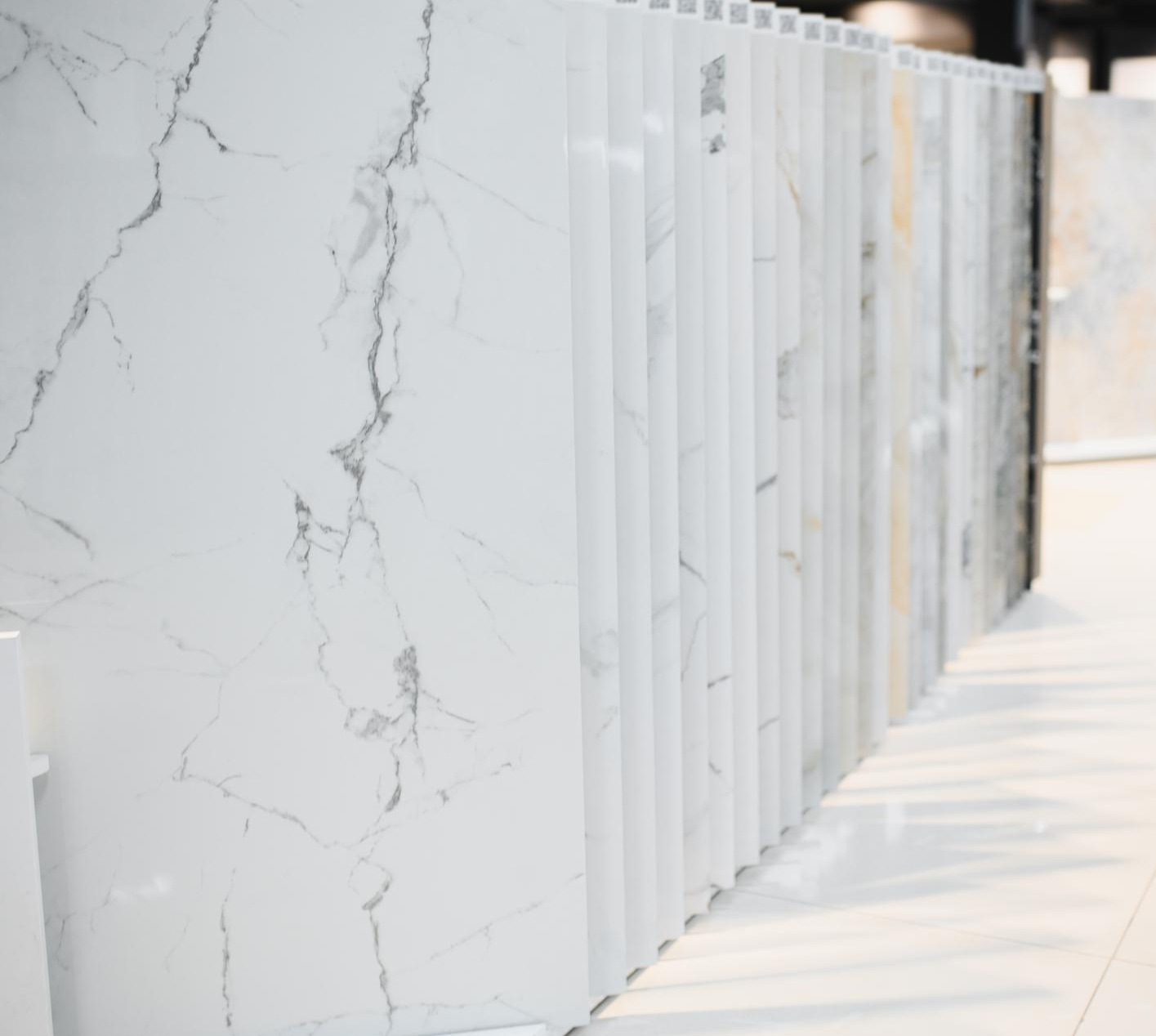
White marble is frequently associated with bright, refined interiors, but choosing it is more complex than selecting the lightest available slab. Base tone, vein density, translucency, slab consistency and finish can all change the final appearance.
For homeowners, architects and developers in Kormangala, Karnataka, comparing a White Marble Dealer requires close attention to both aesthetics and practical project requirements.
White Marble Comes in Many Visual Styles
The term white marble can describe materials with very different appearances.
Some slabs have a clean, quiet background with limited veining. Others contain dramatic grey movement, warm mineral tones or dense natural patterns.
Before selecting a stone, identify the visual direction of the project.
A minimalist interior may call for a restrained pattern, while a feature wall may benefit from more expressive veining.
Look Beyond a Small Sample
A small sample is useful for understanding base colour, but it cannot show how veins move across a complete slab.
For applications such as feature walls, large floors and reception counters, full-slab inspection provides much more useful information.
Designers should also consider how adjacent slabs may be arranged.
Pay Attention to Undertones
White is rarely just white.
Some marble appears cool, while other material can carry warmer cream tones. These differences may become more noticeable once the stone is placed next to wall paint, cabinetry and lighting.
Comparing samples alongside other project finishes can prevent unexpected colour clashes.
Ask About Suitable Applications
Appearance should never be considered in isolation.
A White Marble Dealer should be able to discuss the basic characteristics of the available stone so the project team can assess its suitability.
Depending on the material and design, white marble may be considered for:
- Flooring
- Wall cladding
- Staircases
- Vanity areas
- Decorative panels
- Reception spaces
- Selected countertops
Maintenance expectations should also be understood before installation.
Plan Vein Direction
Vein direction can become an important design element.
Randomly cutting slabs may interrupt natural movement, while thoughtful planning can create a more cohesive surface.
For high-visibility applications, designers can prepare layouts using the selected slabs before fabrication. This is especially useful when trying to create continuous vein movement across adjacent panels.
Understand Maintenance Expectations
Light-coloured stone can make certain marks more visible, so maintenance should be considered from the beginning.
Ask about appropriate cleaning methods and any protective treatment recommended for the selected stone and application. Property owners should avoid assuming that all cleaning products are suitable for natural marble.
Evaluate Total Project Requirements
A supplier should be evaluated on more than the displayed material rate.
Check available quantities, slab dimensions, consistency, processing requirements and dispatch arrangements.
For a larger project in Kormangala, Karnataka, these operational details can be just as important as the visual quality of the stone.
Nakoda Marble serves customers evaluating marble and other natural stone materials for residential and project applications. Buyers should use supplier discussions to clarify material characteristics rather than relying only on visual impressions.
White marble can create a distinctive interior when it is selected with the complete design in mind. Careful attention to undertone, veining, quantity and application helps transform a visually attractive slab into a well-integrated architectural surface.